顯示具有 Contax 標籤的文章。 顯示所有文章

2026年4月6日 星期一

Zeiss-Opton Biogon 35mm f2.8 T and Sony A7C

2026/3/22

This Zeiss-Opton Biogon 35mm f/2.8 T (Contax RF mount) is a lens I added to my collection over twenty years ago, back when I was still actively shooting film. Its defining feature is the highly protruding rear element, which comes very close to the film plane. This design was intended to achieve near-zero distortion, resulting in images with virtually no geometric deformation and extremely high resolution. However, what was an advantage in the film era becomes a limitation in the digital age. Because the rear element sits extremely close to the image sensor—and digital sensors are less capable of capturing oblique light rays—this leads to noticeable vignetting around the edges of the image. The effect is especially pronounced at f/2.8, but improves significantly when stopping down to around f/5.6–f/8.

這顆 Zeiss-Opton Biogon 35mm f2.8 T (Contax RF接環) 是我在二十幾年前還常在拍底片時收藏的鏡頭。它的特點就是後鏡組很突出,就快要頂到底片平面了,據悉這樣的設計是追求零畸變,成像幾乎沒有變形,且解析度極高。但這項在傳統底片時代的優勢,在數位攝影時代,因為後鏡組極度靠近感光元件,且因感光元件無法取樣斜進光線的特性,導致成像周邊有很明顯的失光現象,在光圈f2.8時非常明顯,光圈縮小至f5.6-8之後可獲得大幅度改善。


Zeiss-Opton Biogon 35mm f2.8 T (f2.8)


Zeiss-Opton Biogon 35mm f2.8 T (f5.6 or smaller)


Zeiss-Opton Biogon 35mm f2.8 T


Zeiss-Opton Biogon 35mm f2.8 T


Zeiss-Opton Biogon 35mm f2.8 T


Zeiss-Opton Biogon 35mm f2.8 T on Sony A7C

2026年3月29日 星期日

Zeiss 35mm f2.8 Lens Collection : Biogon, Distagon, Flektogon and Sonnar

2026/3/21

Previously, I was already using three cameras — the Zeiss Ikon CONTAX RF, Kyocera CONTAX SLR, and Sony A7III — and I also owned three 35mm f/2.8 wide-angle lenses, namely the Biogon, Distagon, and Sonnar, each representing different optical designs. On a whim, I started wondering whether there were any other 35mm f/2.8 lenses within the Zeiss lineup that featured different optical designs. The answer turned out to be Flektogon and Biometar. The former comes in M42 and Exakta mount versions, while the latter is available in the CONTAX RF mount. The Flektogon 35mm f/2.8 M42 is relatively easy to find on the second-hand market, so I also picked up a Pentacon Praktica L camera to pair with it, adding another set to my Zeiss 35mm f/2.8 lens collection. As for the Carl Zeiss Jena Biometar 35mm f/2.8, not only is it quite expensive, but it also overlaps in focal length with my existing Zeiss-Opton 35mm f/2.8, so I decided to put that idea on hold for now. Below is a description of these lenses quoted from ChatGPT:

先前因為已經使用 Zeiss Ikon CONTAX RF、Kyocera CONTAX SLR、SONY A7III 這三台相機,也同時擁有了三顆 35mm f2.8 的廣角鏡頭,依序是 Biogon、Distagon、Sonnar 這三種光學設計。 一時心血來潮,想說看看 Zeiss 鏡頭群中是不是還有其他不同光學設計的 35mm f2.8 鏡頭,答案是 Flektogon 和 Biometar,前者有 M42 和 Exakta 兩種相機接環版本,後者則是 CONTAX RF 相機接環版本。 Flektogon 35mm f2.8 M42 在二手市場上相對比較好取得,我也同時找了一台Pentacon Praktica L 相機來搭配,讓我的 Zeiss 35mm f2.8 鏡頭收集又多了一組。至於 Carl Zeiss Jena biometar 35mm f2.8 這顆鏡頭,除了價格不便宜,同時也和手上的 Zeiss-Opton 35mm f2.8 焦段重複,就暫時先打消收集的念頭了。以下引用 ChatGPT 對這些鏡頭的介紹:


These four 35mm f/2.8 lenses represent the optical pinnacle of Zeiss across different eras and camera systems. Although they share the same maximum aperture, their internal constructions and rendering characteristics are completely distinct:

這四款 35mm f/2.8 鏡頭代表了蔡司(Zeiss)在不同時代與相機系統上的光學巔峰。雖然光圈相同,但其內部構造與成像個性截然不同:

Zeiss 35mm f2.8 Lens Collection


(1) Biogon 35mm f/2.8: The Distortion Killer of the Rangefinder World

Optical Design: Highly symmetrical construction.
Key Strength: Near-zero distortion. Because the rear element sits extremely close to the film plane, the light path is very direct, resulting in minimal distortion and exceptionally high resolution.
Best Suited For: Street photographers and architectural photography enthusiasts.
Representative Model: Post-war Zeiss Ikon Contax RF.

(1) Biogon 35mm f/2.8:旁軸界的畸變剋星

光學結構: 高度對稱設計(Symmetrical Design)。
核心優勢: 零畸變。因為後鏡組極度靠近感光元件,光線路徑直,幾乎沒有變形,且解析度極高。
適合誰: 街頭攝影師、建築攝影愛好者。
代表作: Zeiss Ikon Contax RF 戰後版。


(2) Distagon 35mm f/2.8: A Stable Foundation for SLR Cameras

Optical Design: Retrofocus construction.
Key Strength: Excellent edge-to-edge image quality. The design deliberately extends the back focus distance to clear the SLR mirror, which also results in favorable light incidence angles on digital sensors.
Best Suited For: Photographers who appreciate classic Zeiss rendering with strong tonal depth and balanced performance across the frame.
Representative Model: Contax Zeiss 35mm f/2.8 T* (C/Y mount).

(2) Distagon 35mm f/2.8:單眼相機的穩定基石
光學結構: 反望遠結構(Retrofocus)。
核心優勢: 邊角畫質優異。為了避開單眼相機的反光鏡,設計上刻意拉長後焦距,這讓它在數位機身上也有很好的光線入射角。
適合誰: 喜歡德系層次感、追求全畫面平衡的攝影師。
代表作: Contax Zeiss 35/2.8 T* (C/Y 卡口)。


(3) Flektogon 35mm f/2.8: The Close-Focus Legend of East German Zeiss
Optical Design: Early retrofocus design (from Carl Zeiss Jena, East Germany).
Key Strength: Exceptional close-focus capability. The minimum focusing distance is typically around 18–19 cm, allowing for wide-angle shots with a macro-like perspective.
Best Suited For: Photographers who enjoy vintage lens character, especially for still life and flower photography.
Representative Model: Carl Zeiss Jena 35mm f/2.8 (M42 mount, commonly known as the “zebra version”).

(3) Flektogon 35mm f/2.8:東蔡的近攝傳奇
光學結構: 早期反望遠設計(來自東德 Carl Zeiss Jena)。
核心優勢: 超強近攝能力。最短對焦距離通常僅 18-19cm,能拍出具備廣角透視感的微距效果。
適合誰: 喜歡老鏡氛圍、拍攝靜物或花卉的玩家。
代表作: Carl Zeiss Jena 35/2.8 (M42卡口,俗稱「斑馬版」)。


(4) Sonnar 35mm f/2.8: A Modern Benchmark for Compactness
Optical Design: An asymmetric evolution of the Gauss-type design.
Key Strength: Exceptional compactness and high contrast. Despite its relatively simple construction, it is highly efficient, producing rich colors and the clear, modern Zeiss rendering.
Best Suited For: Photographers who prioritize portability and a “carry-everywhere” setup, especially Sony E-mount users.
Representative Model: Sony Zeiss FE 35mm f/2.8 ZA (pancake lens).

(4) Sonnar 35mm f/2.8:現代輕量化代名詞
光學結構: 非對稱的高斯演進版。
核心優勢: 極致輕便與高對比。結構簡單但效率極高,成像色彩濃郁且帶有現代蔡司的通透感。
適合誰: 追求「隨身機」手感、Sony E 接環用戶。
代表作: Sony Zeiss FE 35mm f/2.8 ZA (餅乾鏡)。


If you prioritize maximum resolution and near-zero distortion, choose the Biogon
→ e.g. ZEISS Biogon T* 35mm f/2.8 ZM
If you want close-up or macro-like wide-angle shots, choose the Flektogon
→ e.g. Carl Zeiss Jena Flektogon 35mm f/2.8 M42
If you want the most compact autofocus lens, choose the Sonnar (FE version)
→ e.g. Sony Zeiss FE 35mm f/2.8 ZA
If you’re on a budget but want classic Zeiss T* color rendering, choose the Distagon
→ e.g. Carl Zeiss Distagon 35mm f/2.8 (C/Y mount)

快速選購指南
如果你追求最高解像力與無變形 選 Biogon。
如果你想拍微距或特寫 選 Flektogon。
如果你想要最輕便的自動對焦鏡 選 Sonnar (FE版)。
如果你預算有限但想要經典 T* 色彩 選 Distagon。


The minimum focusing distances of these four lenses differ quite significantly. I’ve included uncropped sample photos taken with them adapted to the Sony A7 III for your reference.

這四顆鏡頭的最近對焦距離差異還蠻大的,附上專接到 Sony A7 III 拍攝的未裁切相片給讀者們參考。


Carl Zeiss Jena Flektogon 35mm f2.8


Carl Zeiss Distagon 35mm f2.8 T*


Carl Zeiss Sonnar FE 35mm f2.8 ZA T*


Zeiss-Opton Biogon 35mm f2.8 T

2024年5月26日 星期日

Rebirth Zeiss-Opton 50mm f2 on Sony A7III 老鏡復活

 2024/5/26

Zeiss-Opton 50mm f2 T on Sony A7III

In 2005, when CONTAX cameras were discontinued and digital cameras were becoming increasingly popular, I bought my first digital SLR — the Canon EOS Kiss Digital. I later upgraded to the EOS 5D Mark II, partly because it allowed me to use CONTAX lenses via an adapter. The downside was that I had to focus with the lens wide open, then stop down to meter the light before pressing the shutter — a cumbersome process. At the time, my biggest hope was that a manufacturer would eventually release a full-frame digital camera with a universal mount and electronic viewfinder, so that my CONTAX Carl Zeiss lenses could be revived in the digital age, bringing back the joy of manual focus photography.

在2005年,CONTAX相機停產,數位相機逐漸普及時,我買了第一台數位單眼相機Canon EOS Kiss Digital,之後也升級到EOS 5G Mark II,目的之一就是可以透過轉接環使用CONTAX鏡頭。它的缺點是需先用大光圈對焦,再用縮光圈測光,之後才能按下快門拍照,因此當時我的最大的期待就是有家廠商出了一台萬用接環具有電子式觀景窗的全幅數位相機,可以讓我的CONTAX Carl Zeiss 鏡頭可以在數位時代復活,恢復手動對焦攝影的樂趣。

Finally, in 2013, Sony released the first full-frame mirrorless camera. With its short flange distance of just 18mm, it not only supported SLR lens adapters but also allowed lenses from traditional rangefinder cameras to be used. In order to continue using my collection of lenses — Contax SLR/RF, M42, L39, and Hasselblad — in the digital photography era, I chose the right time to switch my entire Canon EOS camera and lens system to the Sony A7 series.

終於在2013年,Sony發表了第一台全幅無反光鏡單眼相機,由於法蘭距僅18mm,不但適合轉接單眼相機的鏡頭,也讓傳統連動測距式相機的鏡頭可以轉接後使用。為了讓我收藏的各種鏡頭Contax SLR/RF、M42、L39、Hasselblad 可以在數位攝影時代能繼續發揮,我找了適當的時機將全套的Canon EOS相機和鏡頭換成Sony A7系列。

This Zeiss-Opton 50mm F2 T lens is over 70 years old, yet it still performs beautifully on the Sony A7 III. In this backlit shot of a Bauhinia flower petal and green leaves, the transparency is stunning, and the countless bokeh highlights in the background seem to be celebrating the rebirth of a vintage lens.

這顆 Zeiss-Opton 50mm F2 T 已超過70年,在Sony A7 III相機上仍然發揮得很好,這張背光的羊蹄甲花瓣與綠葉,晶瑩剔透,背後無數光點,看似慶祝老鏡重生。

Zeiss-Opton 50mm f2 T

Zeiss-Opton 50mm f2 T


2023年9月9日 星期六

Cemented Faces Repaired, Carl Zeiss Mirotar 8/500 T* 鏡片膠合異常

2023/9

Over the past few years, I have often purchased second-hand lenses from Yahoo Auctions Japan. The main reasons are the wide selection and reasonable prices (the depreciation of the Japanese yen is also a factor). Of course, there have been quite a few cases of stumbling upon lemons. Minor issues like loose parts leading to the aperture not opening or small patches of spiderweb-like mold are still relatively easy to deal with.

This time, I hit a major snag. The purchase price of this lens was about sixty percent of the market price, and as soon as I received it, I was startled by the droplet-shaped reflections on the reflective mirror elements. It didn't look like mold, and I suspected it might be due to the silver coating on the reflective mirror cracking. It seemed unlikely to be salvageable, but I decided to give it a shot and consulted a professional technician.

I made an appointment with the technician, and upon inspection, he determined that the poor adhesion between lens elements was causing the issue. There are two lens surfaces on this lens that need to be bonded with special glue. The previous repair technician probably didn't bond them properly, causing air bubbles in the adhesive, resulting in marks resembling water droplets.

這幾年常常從日本Yahoo拍賣購買二手鏡頭,主要是選擇多,價格合理(日幣貶值也是因素之一),當然踩到地雷的案例也不少,小問題像是零件鬆脫導致光圈無法開啟、小範圍蜘蛛網狀霉絲都還容易處理。

這次算是採到大地雷,這顆鏡頭的購入價約是市價的六成,拿到手後第一時間就被反射鏡組上反射的水滴狀影像嚇到,看起來不像霉絲,自己判定可能是反光鏡的鏡面塗銀層龜裂,很可能沒救了,不過還是死馬當活馬醫吧,找專業的師傅看看吧。

跟師傅約了時間,師傅看了一下就判定這是鏡組間黏合不佳,這鏡頭有兩處鏡片接觸面須用專用膠黏合,前一位修鏡師傅應該沒黏好了,導致黏膠間產生氣泡,形成類似水滴狀的痕跡。


Water droplets in Front View
鏡頭正面水滴狀脫膠


Water droplets in Rear View
鏡頭背面水滴狀脫膠


The technician explained that if it were old factory lenses, heating the lens group after applying adhesive could separate them. If it was a more recent adhesive, such as UV glue, it would require soaking in a solvent solution to separate them. Two weeks later, the technician returned the lens to me, now clean and pristine, explaining that the lens group was separated after soaking in the solvent and then re-bonded after cleaning.


修鏡師傅表示如果是舊的原廠鏡片黏合膠應該加熱後鏡組就可分離,如果是必較近期的黏合可能是用UV膠,需要泡溶劑藥水才可分離。兩週後,師傅交還給我乾淨漂亮的鏡頭,並說明是泡溶劑後分離鏡組,清潔後再重新黏合。


The lens after repair
經修復後的鏡頭


Carl Zeiss Mirotar 8/500 T*
Cemented Face 膠合面示意圖


2022年2月6日 星期日

CONTAX S2/Aria, YASHICA FX-3 Viewfinder Rubber Eyepiece Replacement 相機的眼罩代用品

2022.2.6

The original viewfinder rubber eyepiece model for YASHICA FX-3, CONTAX S2, and Aria is F-3. Since these cameras have been discontinued for many years, it's nearly impossible to find the original eyepiece on the internet. Of course, using the camera without the eyepiece is still possible. However, for photography enthusiasts who wear glasses, it can be inconvenient because the plastic frame of the viewfinder constantly hits the lenses of the glasses. This repeated contact may cause the coating on the lenses to peel off. Therefore, I believe installing a rubber eyepiece has its advantages, providing both light shielding and protection for glasses. Are there any non-original replacement options? Yes, let's try two non-original rubber eyepieces here.

After installation testing, the rubber eyepiece with the code EF (for EOS 450D/550D/600D/650D/700D) and EB (for EOS 60D/50D/5D2/40D/30D/20D/10D) from Canon EOS digital cameras fits perfectly.

YASHICA FX-3 、CONTAX S2及Aria的原廠觀景窗橡膠眼罩型號是F-3。由於這幾款相機已經停產多年,所以原廠眼罩在網路上幾乎是買不到了,當然沒有眼罩也是可以用啦。這對戴眼鏡的攝影同好來說倒是有些不便,因為觀景窗的塑膠外框會一直敲到眼鏡的鏡片,多敲幾次難免鏡片的鍍膜會脫落,所以我覺得裝個橡膠眼罩還是有好處,除了遮光還有保護眼鏡。那麼有沒有非原廠的替代品呢? 有的,這裡就讓我們來試試兩個非原廠的橡膠眼罩吧。

經過安裝測試,Canon EOS 數位相機的觀景窗橡膠眼罩編號 EF (EOS 450D/550D/600D/650D/700D 及 EB (EOS 60D/50D/5D2/40D/30D/20D/10D) 剛好可以適用。


CONTAX S2 Viewfinder 觀景窗


CONTAX S2 Viewfinder 觀景窗 + F-3 Eyepiece 橡膠眼罩


CONTAX S2 Viewfinder 觀景窗 + Canon EF Eyepiece 橡膠眼罩


CONTAX S2 Viewfinder 觀景窗 + Canon EB Eyepiece 橡膠眼罩


Left to right: CONTAX/YASHICA F-3、Canon EF、Canon EB


2013年8月9日 星期五

Repair of CONTAX T2 維修經驗分享

I haven't taken my CONTAX T2 out for external shooting with film for nearly 10 years. However, this roll of Kodak TMAX 400 produced some confusing light halos. Initially, I thought it might be due to poor anti-glare capabilities of the lens, especially considering the first photo was taken around 10:30 in the morning with the sun just above the frame's upper right corner. But upon further inspection of other photos, I found that some indoor shots without direct sunlight also exhibited the same halos. At the same time, I noticed that sometimes the camera lens would get stuck when retracting into the body, as shown in the accompanying video, stopping halfway. Upon comparing the diameter of the lens barrel with that of the halos in the photos, I suddenly realized that my camera was leaking light...

近10年沒有將底片裝入CONTAX T2外拍了,結果這捲Kodak TMAX 400出現了令人困惑的光暈,會說是光暈是因為以下這張照片是第一張約莫早上10:30左右,太陽剛好在畫面的右上方,乍看之下以為是鏡頭抗耀光能力不好造成的光暈 ,繼續檢視其他相片後,發現有幾張相片即是在沒有太陽的室內,一樣會出現光暈。同時間,相機鏡頭縮入機身時有時候也卡卡的,如以下影片,會停在半途。比對鏡頭鏡筒的直徑竟然跟以下光暈的直徑雷同,這時後才恍然大悟,我的相機漏光了‧‧‧


Could the sun being in the upper right corner around 10:30 cause this halo? No, it was due to light leakage from the camera lens...
約莫10:30左右,太陽在畫面的右上方會造成這個光暈嗎?
不是,是相機的鏡頭漏光了...


Later, I sent the camera to a camera technician for inspection. The report came back stating that the lens barrel's light seal had deteriorated, causing the lens barrel axis to loosen, resulting in the aforementioned malfunctions. However, these issues could be repaired. After waiting for two weeks, the camera finally returned, and the test results showed that everything was back to normal and satisfactory.


後來我把相機寄給相機師傅檢查,回報是鏡筒防漏光套筒老化,鏡頭筒軸鬆動,導致上述兩項故障,可以維修。等了2週,相機終於回來了,試拍結果一切正常,令人滿意。


The repaired CONTAX T2 is once again a vibrant tool.
修復後的CONTAX T2又是一尾活龍


Check out the test photo compilation of the CONTAX T2 after repair.


相機修復後CONTAX T2測試照片集錦

2013年6月3日 星期一

Contax T2 @ Banqiao 435 板橋

The Banqiao 435 is a newly emerging cultural and artistic spot in New Taipei City. However, what attracts most families with children is a large area of fine white gravel sandbox, which is the main attraction for children coming here to play. After spending quite some effort finding a parking spot, as soon as I entered the park, I saw a mother holding an umbrella, enjoying watching her two siblings happily playing in the sand, shielding them from the sun. Watching these children shovel sand into the toy truck's bucket and then pour it out, repeating the same action tirelessly, they seemed to be enjoying themselves immensely. After playing for a while, the children were finally willing to wash their hands and feet and move to the shaded playground area with slides. Next time, it would be better to come earlier or after 3 p.m. for a more relaxed experience.

Photos please refer to the Banqiao 435 album.


板橋435是新北市的一個新興的藝文景點,不過最吸引一般育兒家庭的是一大片細白石子的沙坑,這才是小朋友們來這裡玩的目的。費了好一番工夫停好車,一進園區就看到媽媽撐著傘幫兩個玩沙玩得不亦樂乎的姐弟倆遮陽,看這孩子們把沙鏟入玩具卡車的車斗,再把沙倒出來,反覆做同樣的事,樂此不疲。玩了好一會,孩子們才願意清洗手腳,轉往有樹蔭的溜滑梯遊樂區移動,下次應該早一點或是下午3點後再過來比較輕鬆。

相片請連結 板橋435相簿


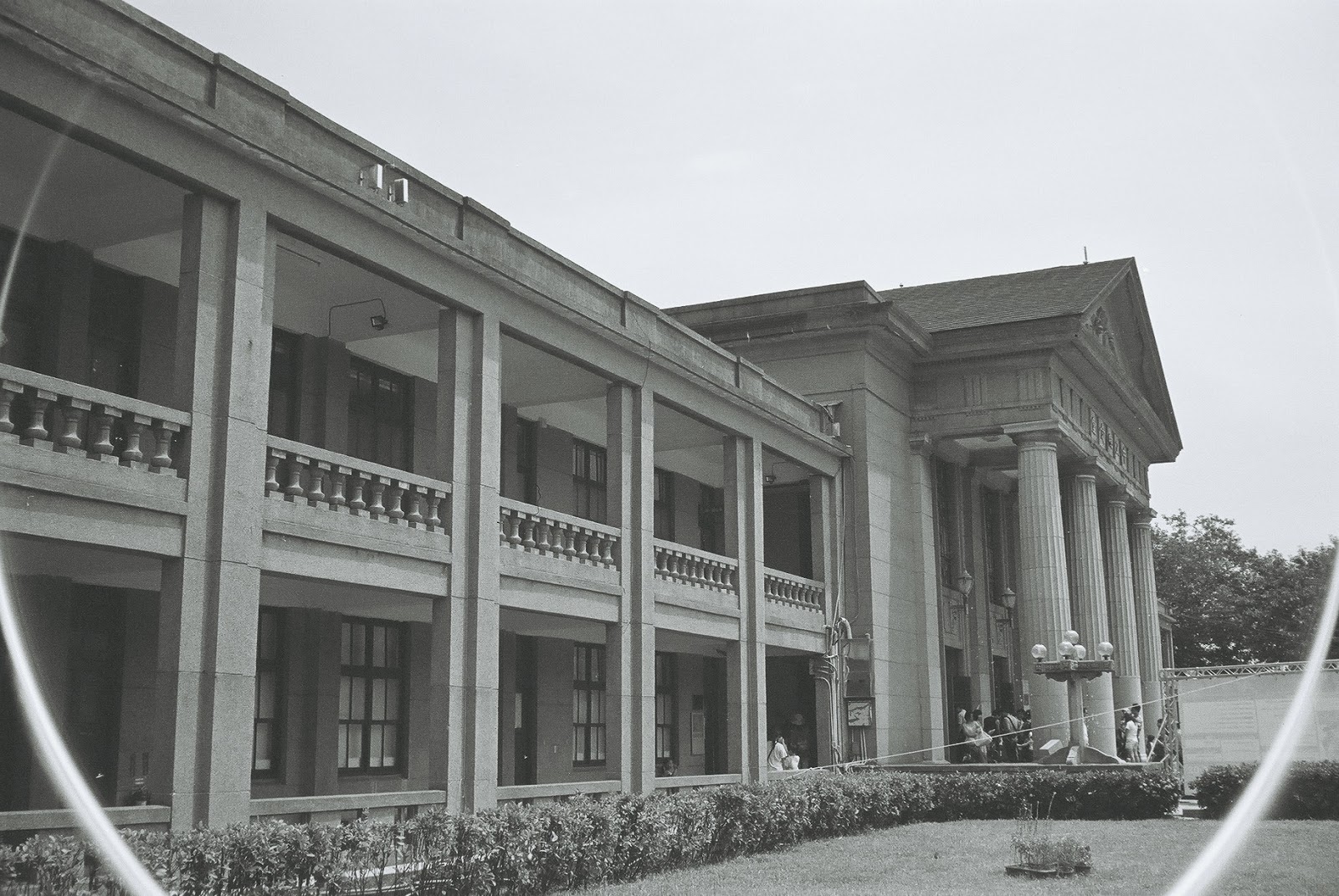
Hall - Chiang Kai-shek Memorial Hall 禮堂 - 中正紀念堂


After enjoying playing in the small white sand area, gently return home as it was.
開心玩完小白沙 輕輕放回原來家


Today's outdoor shooting with the CONTAX T2 was my go-to camera before entering the digital camera era. Besides taking snapshots in Taiwan, I have also been to Japan, Thailand, New Zealand, Italy, the Netherlands, Denmark, and other places, experiencing many battles. Perhaps because I used too much film, the rewind motor had to be repaired once. Since 2003, it has been stored in a dehumidifying box most of the time. These days, I wanted to take it out for some fresh air, but I found that sometimes when turning off the camera, the lens couldn't retract completely. Fortunately, the camera's shooting function is normal, so I still took a roll of Kodak T-MAX 400 outside. However, after developing the film, I found several frames with light leaks, precisely where the lens's outer support retracts. I suspect it might be due to aging light shielding foam or rubber, which not only caused light leaks but also jammed the lens retraction mechanism. I hope there's still a camera technician who can repair this camera.


今天外拍 CONTAX T2是我進入數位相機時代前的隨身機,除了在台灣隨拍,也到過日本、泰國、紐西蘭、義大利、荷蘭、丹麥等地,經歷過不少戰役。大概是底片拍太多了,過片馬達曾經送修過。2003年後就一直常住防潮箱,這幾天想拿出來透透氣,卻發現有時候關機時鏡頭竟然無法全部縮入,還好拍照的功能正常,所以還是外拍了一捲Kodak T-MAX 400。不過拿回沖洗後的底片後,有好幾張底片漏光,漏光的位置剛好是鏡頭縮入後的鏡身外援,猜測可能是遮光海綿或橡膠老化,不但漏光還卡住鏡頭縮入時的軌道。希望還有相機師傅能修這台相機。


Contax T2, Carl Zeiss Sonnar 2.8/38 T*


Contax T2 by Kyocera

2013年5月19日 星期日

Kyocera Contax RX and Aria

Believe that photography enthusiasts who own more than one camera and lens equipment will encounter the same problem when going out, which is what equipment to bring. It's ideal to bring all your gear to avoid any regrets, but sometimes, for the sake of convenience or quick mobility, choosing equipment to bring based on the anticipated photography needs of the day is the thought of most people. Here, I have organized past experiences and, using my equipment as an example, listed some outdoor shooting combinations for reference.

相信擁有一機一鏡以上器材的攝影同好一並會碰到相同的問題,就是出門該帶什麼器材。未免有遺珠之憾,將所有家當都帶出門當然是最好不過了。但有時會了方便或行動迅速,預測當日拍照的需求來選擇外帶的器材,應該是大部分人的想法。這裡把過去的經驗整理了一下,以我的器材為例,列出一些外拍組合供大將參考。

Travel Photography A
旅遊攝影A(28mm ~ 135mm)


Contax Aria
Carl Zeiss Distagon 2.8/28 T*
Carl Zeiss Vario-Sonnar 3.4/35-70T*
Carl Zeiss Sonnar 2.8/135 T*
Total weight 總重: 1800

For general travel photography, the principle is lightweight equipment. For wide-angle and telephoto, D28 and S135 should be the preferred choices. As for the standard lens, I prefer using VS35-70 instead of P50. Although it sacrifices opportunities for low-light shooting, in the efficient setting of travel, a fixed-aperture standard zoom lens covering wide-angle to mid-telephoto can fulfill the need for multiple lenses. And for a lightweight body, nothing beats the Aria.

一般旅遊攝影,器材以輕便為原則,以廣角端和望遠端而言,D28 與 S135 應該是首選。至於標準鏡頭方面我習慣以 VS35-70 來代替 P50,雖然犧牲了弱光下的拍攝 機會,但是在講求效率的旅遊途中,一顆涵蓋廣角與中望遠端的定光圈標準變焦鏡頭的確能攜帶多個 鏡頭的需要。至於輕便的機身,當然非 Aria 莫屬了。

Travel Photography B
旅遊攝影B(21mm ~ 135mm)


Contax Aria
Carl Zeiss Distagon 2.8/21 T*
Carl Zeiss Vario-Sonnar 3.4/35-70T*
Carl Zeiss Sonnar 2.8/135 T*
Total weight 總重: 2035

For architectural or historical site travel photography, D21 provides a satisfying ultra-wide-angle view with minimal distortion. Places like Italy and Kyoto, Japan, are ideal for showcasing this lens, especially for capturing the facades of churches. Before purchasing the Aria, I used to pair it with RX, a combination weighing nearly 2.4kg with three lenses, tripod, and backpack, something to consider for those with a petite stature.

建築或古蹟類的旅遊攝影,D21 可提供滿意的視角(超廣角)與 最低變形率。義大利和日本京都應該是最適合這顆鏡頭發揮的地方,尤其是一些教堂立面的拍攝, 可同時將來往人潮與主題一併納入構圖之中。在購入 Aria 之前,我都是搭配 RX 出勤,一機三鏡近 2.4KG,加上腳架和背包,少說也有 5KG,身材嬌小的人要考慮一下。

Scenic Photography A
風景攝影A(16mm ~ 200mm)


Contax RX
Zenitar Fish-Eye 16/2.8 MC
Carl Zeiss Distagon 2.8/28 T*
Carl Zeiss Planar 1.4/50 T*
Carl Zeiss Vario-Sonnar 4/80-200T*
Total weight 總重: 2355g

A lightweight scenic photography combination, the fisheye lens provides a unique wide-angle effect for natural landscapes. The wide-angle and standard ranges are covered by the acclaimed D28 and P50, ensuring vivid scenery. For telephoto, the VS80-200 is used for techniques involving partial framing commonly used in scenic photography, easily extracting distinctive subjects from chaotic landscapes, and its macro feature (1:4) comes in handy when needed.

輕便的風景攝影組合,魚眼鏡頭所造成的超廣角效果讓自然 風景呈現不同風貌,廣角端和標準端則分別由受好評的 D28 與 P50 負責,絕對能讓景色徐徐如生。 在望遠端則利用 VS80-200 來負責風景攝影中常用到的局部取景的技巧,可以很容易的將具特色的 主題從一片雜亂無章的風景中萃取出來,而所提供的微距功能(1:4)也能適時派上用場。
 

Scenic Photography B
風景攝影B(28mm ~ 180mm)


Contax RX
Carl Zeiss Distagon 2.8/28 T*
Carl Zeiss Planar 1.4/50 T*
Carl Zeiss Makro-Planar 2.8/100 T*
Carl Zeiss Sonnar 2.8/180 T*
Total weight 總重: 2915g

This combination caters to high-quality scenic photography needs, with D28, P50, MP100, and S180 all being lenses known for excellent resolution and color performance. However, it comes with a greater physical cost. After purchasing VS35-70 and S135, I started opting for the "Travel Photography A" combination, as MP100 in this setup offers the possibility of macro photography, making capturing insects or close-ups of flowers a breeze.

這個組合可提供高品質的風景攝影需求,D28、P50、MP100 和 S180 均是解像力與色彩表現極佳的鏡頭,相對的也必須付出較多的體力代價。曾經帶著這樣的組合走過陽明山國家公園的幾個山頭,但是自從購入 VS35-70 和 S135 後,就開始偷懶,改帶「旅遊攝影A」。這個組合的特點在於 MP100 這鏡頭提供了微距攝影的可能性,因此昆蟲或小花小草的特寫(1:1)可說是輕而易舉。

Macro Photography
微距攝影(35mm ~ 100mm)


Contax RX
Carl Zeiss Vario-Sonnar 3.4/35-70T*
Carl Zeiss Makro-Planar 2.8/100 T*
Total weight 總重: 2025g

The macro feature of VS35-70 is designed at the 35mm wide-angle end, providing a magnification ratio of 1:2.5. MP100, on the other hand, achieves a 1:1 ratio at the mid-telephoto end. Both complement each other in macro photography due to their different perspectives. As MP100 weighs 740g and the lens barrel extends approximately twice its length at maximum magnification, it requires a more stable body. Hence, I usually pair it with an RX body and a Gitzo 2 tripod.

VS35-70的Macro功能設計在35mm廣角端,可提供放大率1:2.5。MP100中望遠端放大率則達 1:1。兩者因視角不同,可拍出不同透視感的微距攝影作品,在生態攝影上相輔相成。由於 MP100 重達 740g,且使用最大放大率時鏡筒伸長約一倍,必須使用底盤較穩固的機身,因此我通常搭配 RX 機身與 Gitzo 2 號腳架使用。

Telephoto Photography
遠距攝影(50mm ~ 360mm)


Contax RX
Carl Zeiss Planar 1.4/50 T*
Carl Zeiss Vario-Sonnar 4/80-200T*
Carl Zeiss Sonnar 2.8/135 T*
Carl Zeiss Sonnar 2.8/180 T*
Carl Zeiss Mutar II T*
Total weight 總重: 3460g

Ideal for distant nature photography subjects such as animals and birds in the zoo, distant lotus flowers in ponds, and close-ups of sunsets. The main use of MII teleconverter extends the focal lengths to 270/5.6 and 360/5.6. Although I used TT300 before, after comparing its results with S180+MII, I found no significant advantage in color saturation and resolution for TT300. Therefore, I sold it, as there was limited opportunity to use the 300mm focal length.

適合遠距離自然攝影主題,如動物園中的動物和鳥類,水池中無法接近的荷花,以及夕陽的特寫等。主要利用 MII 加倍鏡的特性,將鏡頭焦距延伸到 270/5.6 與 360/5.6。雖然以前曾用過 TT300,但是在與 S180+MII 的拍攝結果比較後,覺得在色彩飽和度和解析度上 TT300 並無明顯勝出,因此在考慮 300mm 焦距使用的機會不大後將其脫手。

Zeiss Ikon Contax IIa snd D

1932 marked the introduction of the interchangeable lens rangefinder (RF) camera Contax I by Carl Zeiss's camera factory Zeiss Ikon, setting the stage for the Contax brand. In 1936, the Contax II and Contax III (the Contax II version equipped with a light meter) were released, offering an ultra-fast shutter speed of 1/1250 seconds, a 100mm longest baseline, a metal focal-plane shutter widely adopted in modern cameras (note: this is a metal vertical-travel shutter similar in construction to the traditional double-curtain horizontal-travel cloth shutter, differing significantly from the multi-curtain metal shutters used in modern cameras), a convenient single low-speed and high-speed shutter dial, a combined rangefinder and viewfinder, and a three-lug lens quick-detach mount. These features positioned Carl Zeiss as a leader in rangefinder camera technology in its contemporary industry. Around 1937, Carl Zeiss engineers, not content with their achievements, began developing a new generation of cameras, a prototype for modern single-lens reflex (SLR) cameras. However, due to the approaching war, the full realization of this endeavor would have to wait until after World War II.

1932 年,Carl Zeiss 的相機工廠 Zeiss Ikon 推出了一台可交換鏡頭的測距式 (RF) 相機 Contax I,為 Contax 這個品牌揭開了序幕。後續在 1936 年又推出了 Contax II 和 Contax III (附有測光表的 Contax II 版本),這一系列的相機提供了超快速的快門 1/1250 秒,100mm 的最長基線,現代相機廣為採用的金屬縱走式簾幕快門 (註: 此一類似鐵捲門的金屬縱走式簾幕快門,在構造上仍類式於傳統雙簾式的橫走式布幕快門,與現代相機採用的多簾式金屬簾幕快門差異甚大。),方便的單一低速與高速快門旋鈕,合而為一的測距窗與觀景窗,以及 三插刀式的鏡頭快拆接環,使得 Carl Zeiss 在測距式相機技術上的領先當代同業甚多。然 Carl Zeiss 的工程師並不以此為滿足,約莫於1937 年,又開始研發新一代的相機,也就是現代單眼相機的雛型,但是隨著戰事的的逼近,真正的開花結果則要等到二次世界大戰結束之後。

Left: Contax IIa, Right: Contax D

戰後重生 
Post-war Resurgence

1945 was a tragic year for Carl Zeiss. The main production facilities for cameras and lenses, Dresden and Jena, were nearly obliterated by Allied bombings. After the war, the division of Germany into East and West following the Soviet-American rift also divided the path to rebirth for Carl Zeiss.

Under Soviet control in East Germany, Carl Zeiss quickly utilized the surviving equipment and parts in Dresden and Jena to produce some versions of the Contax II/III cameras under the Carl Zeiss Jena name. They also trained Soviet technicians, eventually moving the entire production line to the Soviet Union, where the Kiev 2/3/4 cameras and lenses, mimicking the Contax II/III, were manufactured. With this foundation, East Germany's Carl Zeiss had the opportunity to continue researching pre-war SLR cameras and introduced the world to the first reflex SLR camera with a pentaprism viewfinder in 1949, the Contax S. This was a significant milestone in the history of modern cameras. Later, during the Zeiss Ikon VEB and Pentacon periods, they released cameras such as the Contax D (introduced in 1952, further details below), E (Contax D with a light meter), F, FB, FBM, and more.

1945 年,對 Carl Zeiss 而言是悲慘的一年,主要的相機與鏡頭的生產工廠 -- Dresden 與 Jena,因盟軍的轟炸而幾乎蕩然無存。戰後則由於蘇俄與美國的決裂導致德國的分裂,Carl Zeiss 的重生之路也被一分為二。

在蘇俄控制下的東德 Carl Zeiss 很快的利用 Dresden 與 Jena 僅存設備與零件生產了一些 Carl Zeiss Jena 版本的 Contax II/III相機,同時並訓練蘇俄技師,最後讓蘇俄將整個生產線移至蘇俄,開始生產仿 Contax II/III 的 Kiev 2/3/4 相機與鏡頭。就在這樣的基礎下,東德 Carl Zeiss 有機會繼續戰前單眼相機的研究,並在 1949 年向世界介紹了第一台具有五稜鏡觀景窗的反射式單眼相機 Contax S (註: 戰後除了Contax S,還有匈牙利 Duflex、義大利 Rectaflex、瑞士 Alpa Prisma Reflex 都在發展這項技術,其中應該是Duflex最早1947年少量生產。),打開了現代相機史上的重要一頁。後續更在 Zeiss Ikon VEB 與 Pentacon 時期 推出了 Contax D (1952年發售,下文將介紹的相機)、E(附測光表的Contax D)、F、FB、FBM 等單眼相機。

In West Germany, Carl Zeiss faced more challenges. Engineers and executives, including members of the board, who left the Soviet-occupied zone with the withdrawal of American forces, established the Carl Zeiss company in Stuttgart. With no blueprints, they managed to build the tools for manufacturing cameras and established a complete production line, finally releasing their post-war masterpiece, the Contax IIa, in 1950, followed by the IIIa. While these cameras retained the lens mount and a similar exterior appearance to the Contax II/III, all parts were redesigned and re-manufactured, resulting in improved stability and durability compared to pre-war models.

在西德的 Carl Zeiss 則沒有那麼順利,隨美軍撤離蘇俄佔領區的一批工程師(包含董事會)在 Stuttgart 重新成立了 Carl Zeiss 公司,在連藍圖都沒有的條件下,從生廠相機的工具製作到完整生產線的建立,終於在 1950 年推出了戰後 的大作 Contax IIa (下文將介紹的相機) 和 IIIa,除了與 Contax II、III 有著相同的鏡頭接環與相似的機身外觀外,所有的零件均經過重新設計和生產,穩定性與耐用度均較戰前機型提升許多。

西德 Zeiss Ikon Stuttgart 的商標

東德 Zeiss Ikon VEB 的商標

鏡頭接環
Lens Mount 

Although the Contax IIa was a post-war redesign and production, it retained the lens mount of the pre-war Contax RF series, making almost all pre-war lenses compatible with the Contax IIa (except for the pre-war Biagon 35/2.8). In comparison to the contemporaneous Leica RF cameras with the M39 screw mount, the bayonet mount's convenience is unquestionable. Even the post-war Japanese Nikon S series RF cameras directly adopted the Contax mount. Due to the post-war division of East and West Germany, Contax RF camera lenses came from three sources: West Germany's Zeiss-Opton/Carl Zeiss, East Germany's Carl Zeiss Jena, and the Soviet Union's Kiev series.

The Contax D continued with the M42 screw mount introduced by the Contax S (note: the M42 screw mount originated from Kamerawerke Niedersedlitz's Praktiflex with the original 40.5mm, later changed to 42mm after the war, so it was not first introduced by the Contax S). This mount, due to its ease of production, quickly became the target of imitation in the flourishing post-war Japanese camera industry (SLR), notably by PENTAX (PENtaprism conTAX). In North America, the M42 screw mount is sometimes even referred to as the Pentax screw mount. Thus, apart from the high-quality Carl Zeiss Jena lenses, Contax D had many Japanese lenses to choose from.

Contax IIa 雖是戰後重新設計與生產的相機,但是卻沿用了戰前 Contax RF 系列的鏡頭接環,使得戰前所生產的鏡頭幾乎都可用在 Contax IIa 上 (除了戰前的 Biagon 35/2.8 以外)。相較於同時期 Leica RF 相機的 M39 螺紋接環,插刀式接環的方便性無庸置疑,就連戰後日本 Nikon 研發的 S 系列 RF 相機也是直接採用 Contax 接環。由於戰後東西德的分裂,使得 Contax RF 相機的鏡頭來源分成 3 個地方:西德 Zeiss-Opton/Carl Zeiss、東德 Carl Zeiss Jena 與 蘇聯 Kiev 系列。

Contax D 則是沿用 Contax S 所開創的 M42 螺紋接環 (註:M42螺紋接環是來自於Kamerawerke Niedersedlitz的 Praktiflex原始40.5mm,戰後改為成42mm的螺紋接環,所以並非是Contax S首創),由於生產技術容易,因此很快的成為戰後蓬勃發戰的日本相機工業 (SLR) 的模仿對象,其中以 PENTAX (PENtaprism conTAX) 最為有名,在北美地區甚至以 Pentax 螺紋接環來稱呼 M42 螺紋接環,因此,Contax D 可使用的鏡頭除品質極佳的 Carl Zeiss Jena 鏡頭外,尚有許多日系鏡頭可供選擇。

Contax IIa 插刀式接環

Contax D 螺紋式M42接環

快門結構 
Shutter Mechanism

The Contax IIa used a modern vertically-traveling shutter widely adopted in contemporary cameras. Its mechanical structure is similar to the traditional horizontally-traveling cloth shutter, with the shutter curtain's movement direction changed to top-down. The material was switched to aluminum, and the shutter curtain was composed of dozens of thin aluminum strips (somewhat like the design of a rolling shutter), producing a distinctive shutter sound when released.

The Contax D, on the other hand, used a traditional horizontally-traveling fabric shutter mechanism, which remained the mainstream curtain shutter mechanism until the 1970s.

Contax IIa 採用現代相機廣泛使用的縱走式快門,其機械結構與傳統橫走式快門簾幕類似,只是快門簾幕的行徑方向改為由上而下,材質改為鋁金屬,為使其如布幕快門般捲動,快門由數十片條狀鋁片所組成 (有點像鐵捲門的設計),釋放時有其特有的快門聲響。

Contax D 的快門簾幕則採傳統橫走式移動的布質快門,一直到 70 年代都是簾幕快門機構的主流。

Contax IIa 縱走式金屬快門
 
Contax D 橫走式簾幕快門

速度轉盤
Shutter Speed Dial 

The Contax IIa's groundbreaking 1/1250 sec shutter speed, though modest by today's standards, was revolutionary for the 1950s technology. Another seemingly ordinary feature was the ability to choose low-speed and high-speed shutters on the same dial. This differed from contemporary cameras that had separate dials for low and high speeds.

The design of Contax D's shutter speed dial was considerably different from modern cameras. The shutter speed indicator, shutter dial, and shutter speed dial were separate. Rotating the shutter speed dial (the lower arrowed dial) caused the shutter speed dial (distinguishing low and high-speed shutters with red and black numbers) to move to the indicated speed. Behind the camera, there was a switch to select the indicator pointing to slow or high-speed shutters. It was a complex design and a vulnerable part of the Contax D.

Contax IIa 的 1/1250 sec 快門速度算是劃時代的創舉,雖然從現在的標準來看 1/1000 sec 也只能算是最低需求,但是對 50 年代的技術而言,已經算是高不可攀了。另一項看似普通的特點則是在同一轉盤上可選擇低速快門與高速快門,有別於當代其他採用低速轉盤與高速轉盤獨立分開的相機,後者的設計在 Contax D 上仍保有一些痕跡。

Contax D 的快門轉盤設計與現代相機有很大的不同,快門速度指標、快門轉盤與快門旋鈕都是分開的,轉動快門旋鈕 (下方有箭頭的旋鈕)可令快門轉盤 (以紅色和黑色數字區分低速與高速快門) 轉動到速度指標所指向的快門速度,在機身後方則有一個選擇開關,用以切換指標指向慢速快門或高速快門,是一項很複雜的設計,也是 Contax D 很容易壞的部分。

Contax IIa 整合式快門與底片計數盤 
Contax D 分離式快門盤與底片計數盤

機身規格
Camera Specifications 

詳細機身
規格比較
機身Contax IIaContax D
生產者西德 Zeiss Ikon Stuttgart東德 Zeiss Ikon VEB
發售年約 1950 年約 1952 年
底片型式24mm x 36mm24mm x 36mm
鏡頭接環Contax RF 插刀式接環Contax M42 螺紋式接環
快門型式縱走式金屬簾幕橫向式布質簾幕
快門速度T-B-1-2-5-10-25-50-100-250-500-1250慢速 B-1-2-5-10-20-50
快速 100-200-500-1000
對焦方式重疊式測距觀景窗反射式磨砂對焦屏+菱鏡觀景窗
自拍器有,機械式有,機械式
閃燈接點有,特殊接頭有,PC接頭
機身高度78mm84mm
機身寬度134mm149mm
機身深度44mm52mm
重量520g560g

標準鏡頭
Standard Lenses

The Contax IIa is paired with the early post-war version of the West German-made single-layer T-coated Sonnar 50/2 lens. This lens has specifications for both pre-war and post-war versions. The pre-war version further divides into cylindrical and non-cylindrical designs, all manufactured by Carl Zeiss Jena with lenses lacking coatings. After the war, East Germany's Zeiss continued to produce T-coated lenses under the Carl Zeiss Jena brand, and they were marketed alongside Contax IIa and IIIa cameras. West Germany's Zeiss only produced the non-cylindrical version, initially under the Zeiss-Opton trademark, also featuring T-coating. Later, it switched to the Carl Zeiss trademark, making it the top-tier lens for the Contax RF system.

On the other hand, the Contax D is paired with the East German-made Tessar 50/2.8 from Zeiss, featuring T-coating and considered an affordable standard lens of its time. Similar to the Tessar 50/3.5 paired with the first-generation Contax S, both are standard lenses with small apertures. With the development of the M42 mount, automatic aperture versions were also introduced later.

Contax IIa 所搭配的是西德製具單層 T 鍍膜 Sonnar 50/2 戰後初期版。這鏡頭規格有戰前版與戰後版,戰前版又分沉筒式與非沉筒式設計,均為 Carl Zeiss Jena製造,鏡片均無鍍膜﹔戰後東德蔡司仍繼續以 Carl Zeiss Jena 商標製造 T 鍍膜鏡頭,並搭配 Contax IIa、IIIa 行銷。西德蔡司僅生產非沉筒式版本,初期以 Zeiss-Opton 為商標,亦有 T 鍍膜,後期則以 Carl Zeiss 為商標,可說是 Contax RF 系最高級的鏡頭。

Contax D 所搭配的是東德蔡司具T 鍍膜的 Tessar 50/2.8,是當時的平價標準鏡。與第一代 Contax S 所搭配的 Tessar 50/3.5,都是屬於小光圈的標準鏡。後期隨 M42 接環的發展,也出了自動光圈的版本。
Left: Zeiss-Opton Sonnar 50/2.0, Right: Carl Zeiss Jena Tessar 50/2.8


鏡頭規格
Lenses Secifications

詳細鏡頭
規格比較
鏡頭Zeiss-Opton Sonnar 50/2.0Carl Zeiss Jena Tessar 50/2.8
生產者西德 Carl Zeiss東德 Carl Zeiss Jena
生產年約 1951 年約 1951 年
接環Contax RF 插刀式接環Contax M42 螺紋式接環
鏡組3 群 6 枚3 群 4 枚
光圈2-2.8-4-5.6-8-11-16-222.8-4-5.6-8-11-16
光圈葉片9 片12 片
對焦距離0.9 m ~ 無限遠0.5 m ~ 無限遠
濾鏡口徑40.5 mm40.5 mm
鏡身外徑46.5 mm51 mm
鏡身長度41.5 mm45 mm
重量135 g115 g

參考文獻

1. Charles M. Barringer and Marc James Small,

"ZEISS COMPENDIUM East and West -- 1940-1972",

Hove Collectors Books, 1995.

2. Ivor Matanle,
Standard Lenses
"COLLECTING AND USING Classic Cameras",

Thames and Hudson, 1986.


相關網站

1. The Zeiss Historica Society

2. CameraQuest's Classic Camera Profiles

3. The Zeiss Ikon Contax home

4. Mike's Praktica Home

5. The Contax Classic Supply Store WWRepair